01
Start with your questions
Prices, timing, streets, property taxes: every The Huntingdon question gets a direct answer grounded in current data, not a sales pitch.
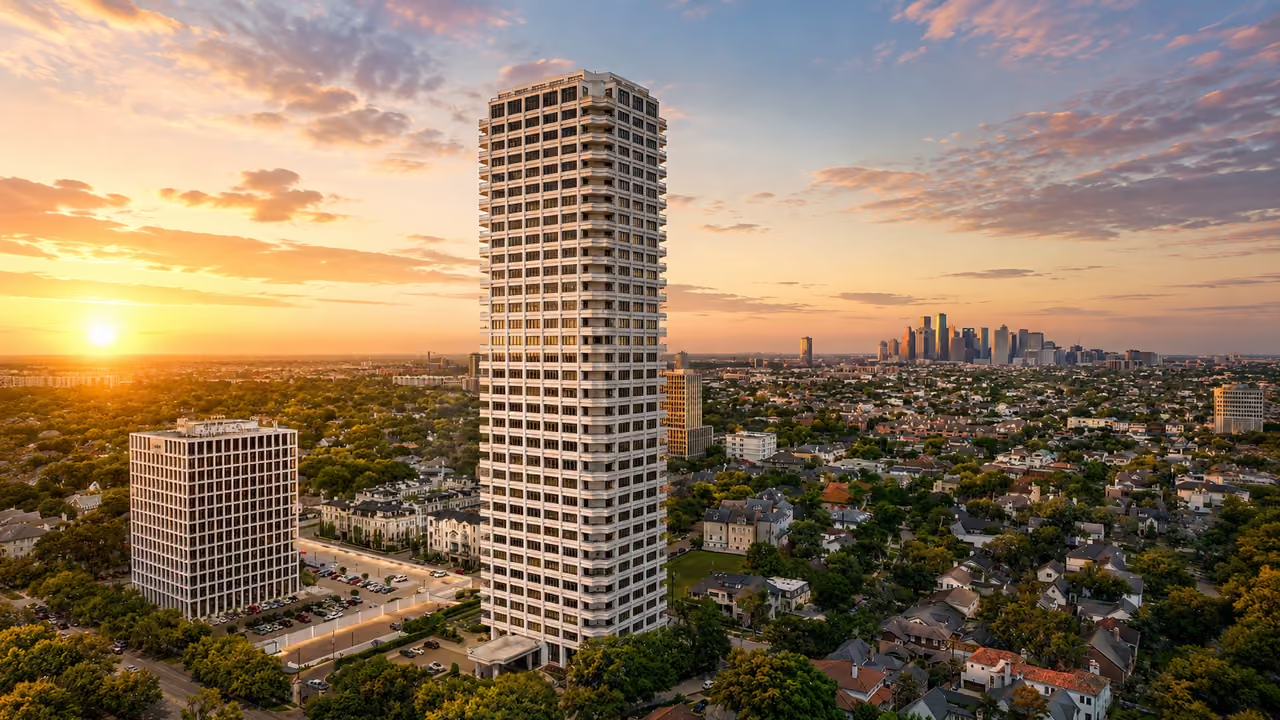
At home in The Huntingdon.
Neighborhood answers, current market data, and a clear next step, whether you're buying in The Huntingdon or thinking about selling. From Paige Martin, Real Broker, LLC.
New to the area? Start with the The Huntingdon neighborhood guide.
By the numbers
The Huntingdon market data as of September 2026.
These figures in context: see the full The Huntingdon market update.
Questions & answers
It is a strong building for one kind of buyer and a poor fit for another, and the difference is size. Homes here run from one bedroom to a full floor, so the answer depends far more on which home you are looking at than on the address itself.
At the smaller end this is an Inner Loop condominium competing with other Inner Loop condominiums, and the usual questions apply. At the upper end it is something else: a serviced single-floor home at a size and price where the realistic alternative is a River Oaks house, which is a different decision with different trade-offs. Between those two ends sit the things that decide it either way: the maintenance fee, which is a rate per square foot rather than a flat charge, how rarely a home comes up, and how wide the spread is between a well-positioned plan and an awkward one. The building guide sets out what the record actually supports.
The median sale price is $1,925,000, at an average of $609 per square foot, computed on September 2026. Those figures rest on very few transactions, so read them as a price level for the building rather than as a valuation of any home in it.
Two things make the headline number weaker here than it would be for a neighbourhood. The first is volume: 5 homes changed hands in the trailing twelve months, and four of those closed in consecutive months with roughly eight months of nothing after them. The second is spread: a building whose plans run from one bedroom to a full floor produces a median that describes no actual home. What a seller or a buyer needs is the handful of comparable plans on comparable floors, not the building figure, and the census of every sale in the last year is short enough to read in a minute.
They compare monthly figures instead of rates. The fee here is set on floor area, so a large home's bill looks alarming beside a small one's while both are paying the same rate per square foot. Divide by the floor area before you compare anything.
The second mistake is treating today's bill as the bill. The rate on listed homes rose from $0.92 per square foot per month in 2021 to $1.14 in 2025, close to six percent a year compounding, and on a large home that difference runs into five figures a year over a ten-year hold. The third is assuming the fee is arbitrary. It is not: the county's own appraisal roll publishes each home's recorded interest in the building, and across all 98 homes those interests track floor area almost exactly. What the maintenance fee page covers is how to read all three of those.
Less than a building median can tell you and more precisely than any automated estimate will. In a building where the plans run from one bedroom to a full floor, a home's value comes from its plan, its floor, its exposure and its condition, judged against a handful of comparable sales.
There is a particular reason the automated estimates are unreliable at this address. Texas does not disclose sale prices, so a portal displaying a sold figure for a Texas home is showing you a computation rather than a fact, and at least one has published a figure for a home in this building below the floor of the range that sale actually closed in. The honest method is the slower one: identify the three or four homes here that actually compare, read what each was asked and how long it took, and price against those. You can request a valuation on that basis and it costs nothing.
Ask what they have published about it, and then check it. An agent who works one building should be able to show you the sales, the documents behind their claims, and the places where the published record contradicts itself, including where the answer goes against the building.
That test is more useful than a track record on its own, because it is checkable while you are sitting there. Ask which sales closed here in the last year and what each was asked. Ask what the maintenance fee is per square foot rather than per month. Ask what the county's appraisal roll says about the number of homes, and see whether the answer matches what the listing portals say. An agent who has done the reading will have an answer and a document; one who has not will have an adjective. There is a fuller version of that test on this site.
How this site works for you
01
Prices, timing, streets, property taxes: every The Huntingdon question gets a direct answer grounded in current data, not a sales pitch.
02
Neighborhood-level numbers, refreshed as the market moves, so a decision to buy or sell in The Huntingdon rests on data rather than headlines.
03
Paige Martin works in The Huntingdon specifically: one neighborhood, followed closely, with the details that only come from being local.
Your next step
Ask for a valuation grounded in current The Huntingdon sales, or put time on Paige Martin's calendar to talk through a purchase or a sale.